
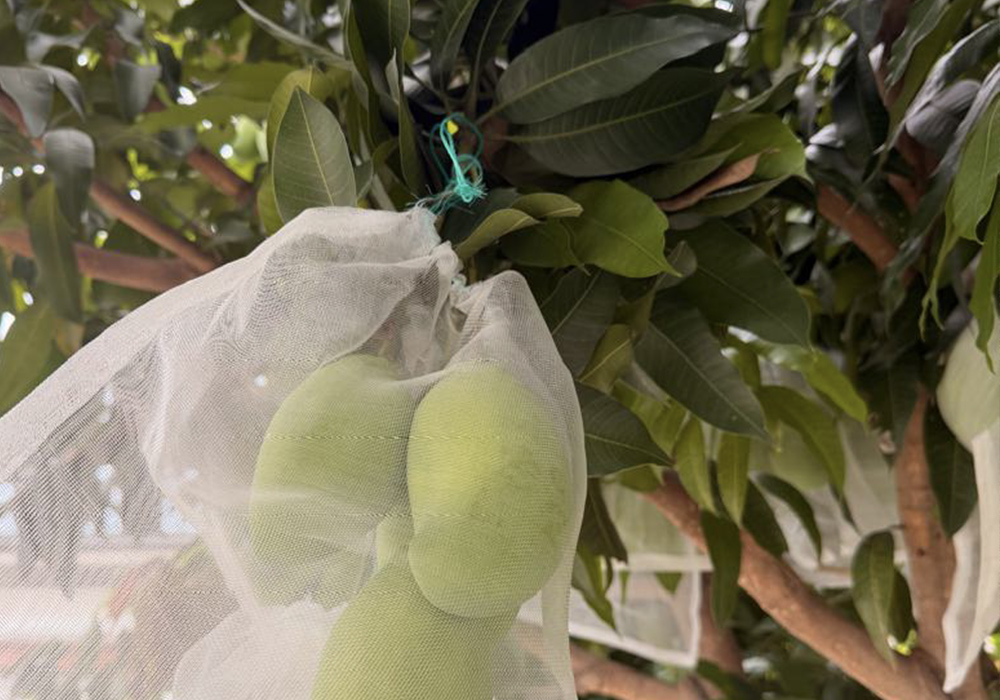

Mango is a seasonal crop, and its nutrient demand shifts sharply between the vegetative years, when the tree is building frame and canopy, and the fruiting years, when flowering and fruit fill draw heavily on potassium. This program follows that shift. It runs on Borochemie NPK 16:16:16 (Triple 16) through establishment, then brings in the higher-potassium Borochemie NPK 12:12:17 once the tree is mature and cropping. Magnesium (MgSO4 / Kieserite) supports leaf function throughout, and ground magnesium lime (CaCO3 / GML) corrects soil pH so the nutrients you apply are actually available to the tree.
Rates are given as total kilograms per tree per year, split across the number of rounds shown. The per-round figure is the annual rate divided by the number of applications, which is what your field team applies each visit.
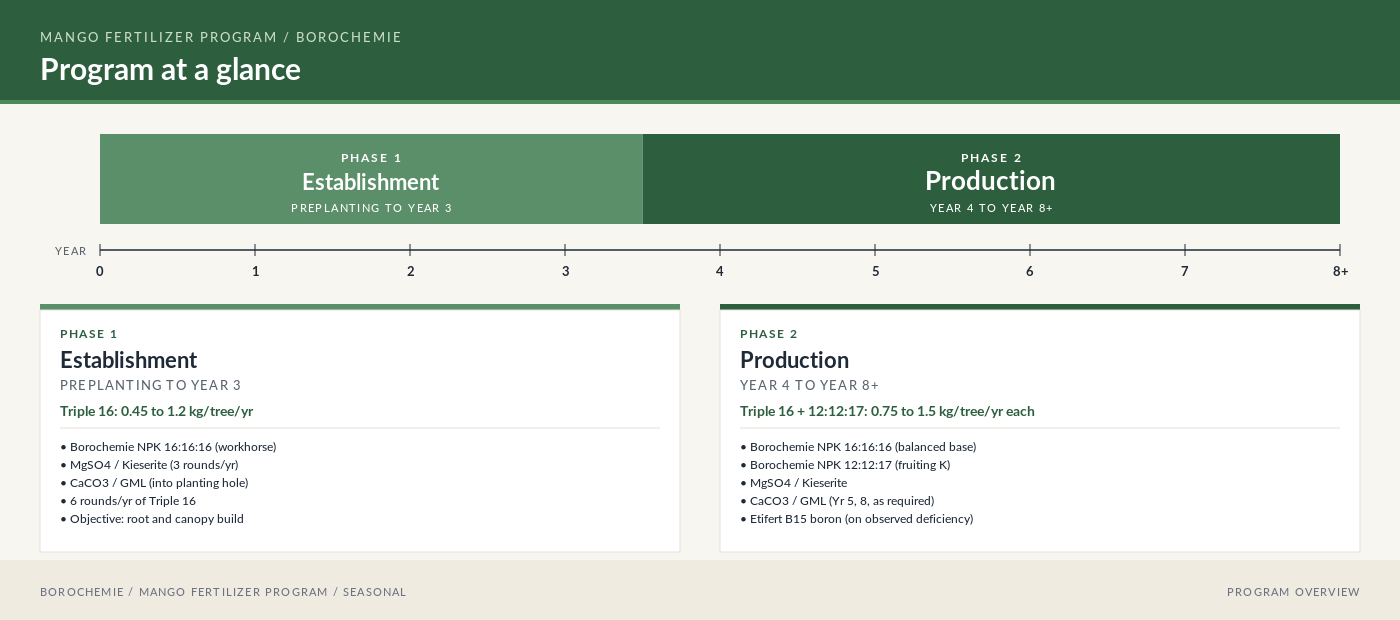
Phase 1: Establishment (Preplanting to Year 3)
The immature years, when the objective is root establishment and canopy build rather than fruit.
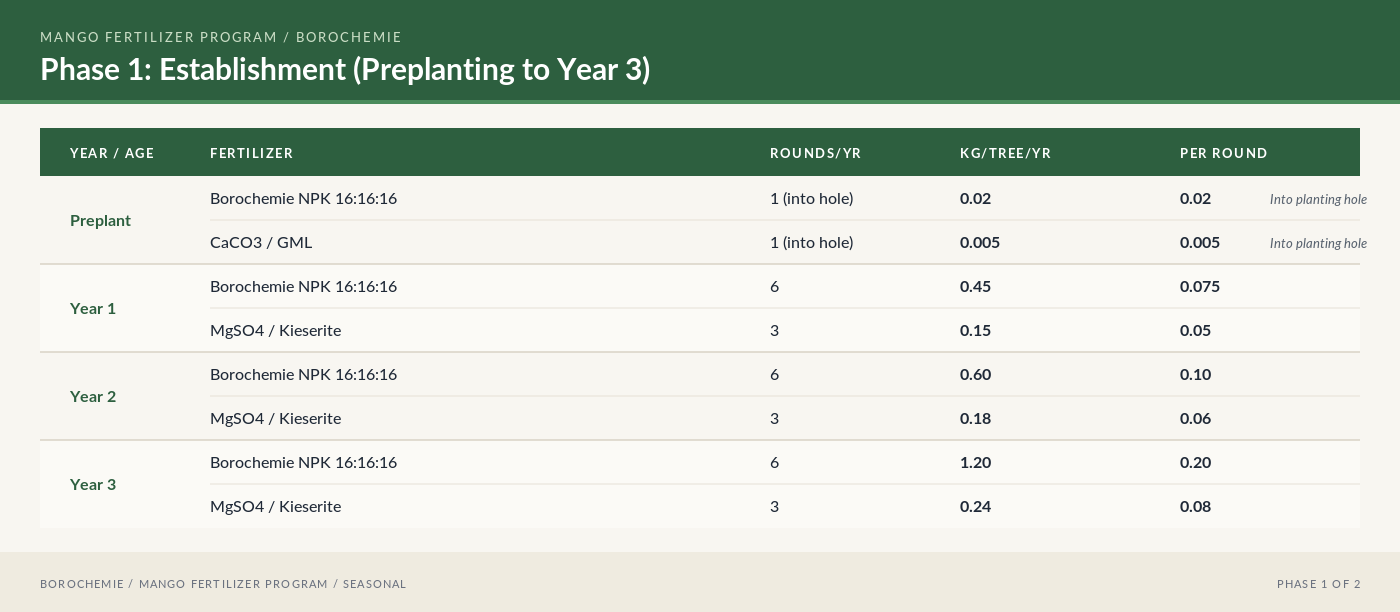
At planting, a small charge of Borochemie NPK 16:16:16 and lime goes into the planting hole to give the young tree an immediate, balanced supply and to start correcting pH at the root zone. Through Years 1 to 3, Triple 16 is applied in six rounds a year, climbing from 0.45 to 1.2 kg per tree as the canopy expands. Magnesium is supplied three times a year as MgSO4 or Kieserite. The balanced 16:16:16 ratio matches the roughly equal demand for nitrogen, phosphorus, and potassium in a tree that is putting on wood and leaf, not yet fruit.
Phase 2: Production (Year 4 to Year 8 and beyond)
The mature, cropping years. Borochemie NPK 12:12:17 joins the program to supply the extra potassium that flowering and fruit development require.
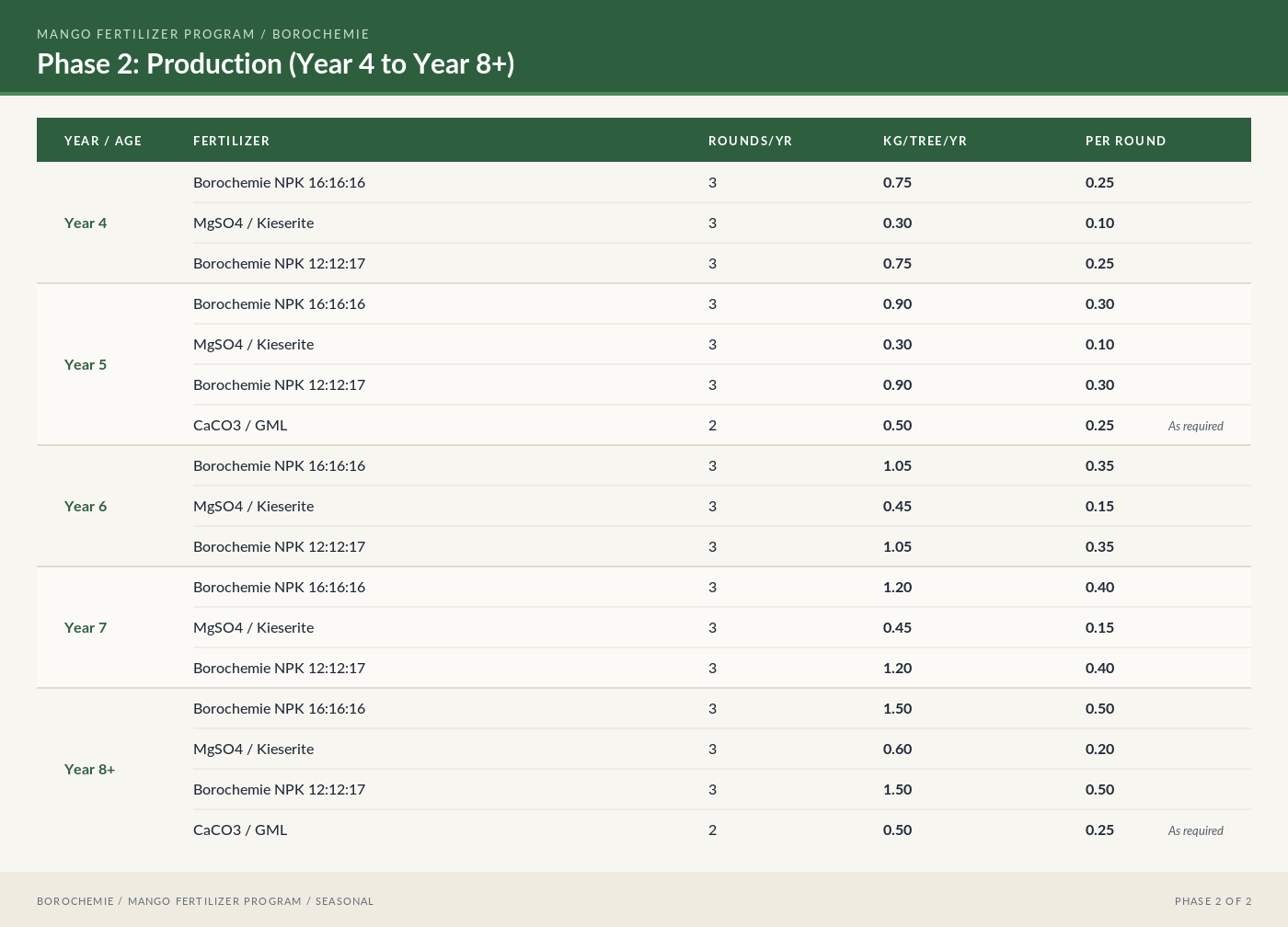
From Year 4, the tree is carrying fruit and the program runs Triple 16 and NPK 12:12:17 side by side, each in three rounds a year. Triple 16 keeps the balanced base supply going, while the 17 percent potassium in NPK 12:12:17 meets the higher potassium pull of flowering and fruit fill. Annual rates climb steadily with tree size, reaching 1.5 kg per tree per year of each compound from Year 8 onward. Magnesium rises in step. Lime is scheduled in Years 5 and 8 at 0.5 kg per tree across two rounds, applied as required based on soil pH.
Why a compound NPK
Some growers still blend straight fertilizers by hand at the tree. Borochemie compound NPK removes that variability. Every granule of Triple 16 or NPK 12:12:17 carries all three nutrients in the declared ratio, so each tree receives the same balanced feed at every round, with no risk of one tree getting a scoop that is mostly nitrogen and the next getting one that is mostly potassium. Across an orchard applied by hand over several rounds a year, that granule-level consistency is one of the simplest levers on even cropping.
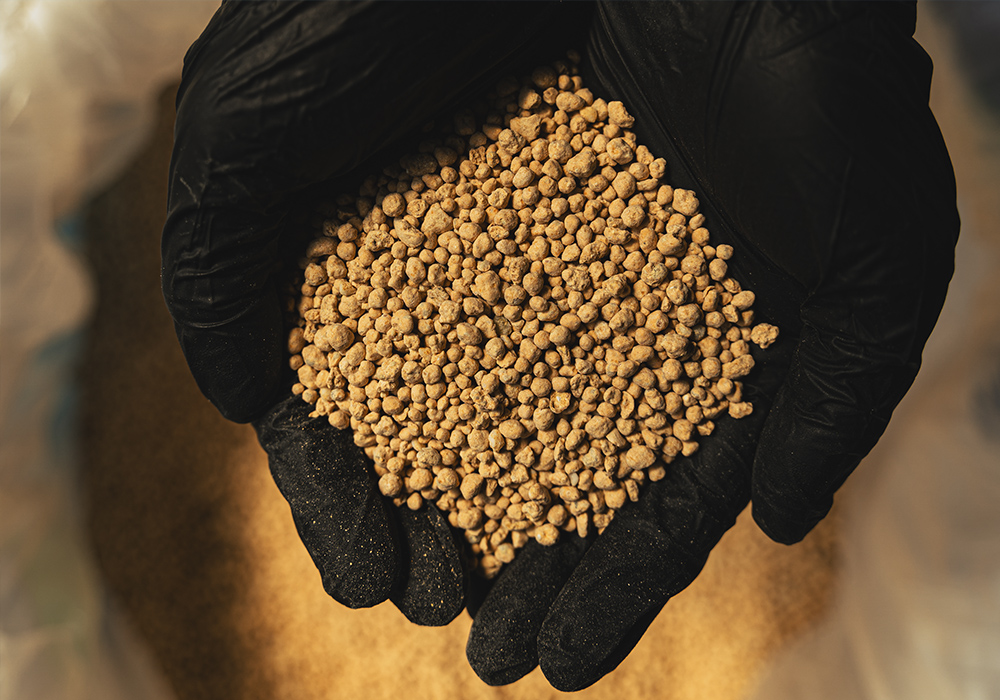
Borochemie NPK 16:16:16 (Triple 16) carries establishment and stays in the mature program as the balanced base feed.
Borochemie NPK 12:12:17 enters at fruiting maturity, when potassium demand climbs with flowering and fruit development.
Magnesium and lime are part of the program, not extras
Magnesium is applied throughout as MgSO4 or Kieserite. It sits at the centre of the chlorophyll molecule, so a magnesium shortfall shows first as interveinal yellowing on older leaves and, left uncorrected, as weaker fruiting. Ground magnesium lime corrects soil pH and supplies calcium. On the acidic soils common across much of Malaysia, skipping lime quietly locks up the nitrogen and potassium you have already paid for, so the pH correction in Years 5 and 8 protects the return on the whole program.
A note on boron and micronutrients
The base mango schedule does not carry a boron line. In mango, boron supports flowering, pollen viability, and fruit set, and a deficiency tends to surface as poor fruit set or internal fruit disorders. If leaf analysis or visible symptoms point to a shortfall, boron can be added as a corrective, and Borochemie Etifert B15 is the product used for that purpose across the company’s other fruit programs. Confirm need against foliar sampling before applying, since boron has a narrow margin between sufficient and excess.
Next step
If you would like this program adapted to your orchard’s soil analysis, leaf sampling history, or variety and spacing, the Borochemie agronomy team will overlay the schedule on your own data and return a customised mango manuring program.
Send your most recent soil and foliar reports to your Borochemie account manager, or request an orchard visit.
