


As business owners, we are used to managing risk. We build buffers into our supply chains, diversify our client bases, and monitor market trends. Yet, there are some events so monumental and systemic that they test even the most robust strategic plans. The recent conflict involving Iran is one such defining moment for the global agriculture and chemical manufacturing industries.
For decades, the Middle East has been the undisputed heart of the global energy market. But for businesses that utilize fertilizer, whether you are a commercial farmer, a plantation manager, or a manufacturer of agricultural inputs, the region is just as vital as a source of nutrients. A disruption there does not just raise the cost of gasoline; it ripples through the very soil that feeds the world.
To understand the severity of the current situation, we need to trace the multiplier effect from the battlefield to the farm gate.
Why Fertilizer is Tied to Oil
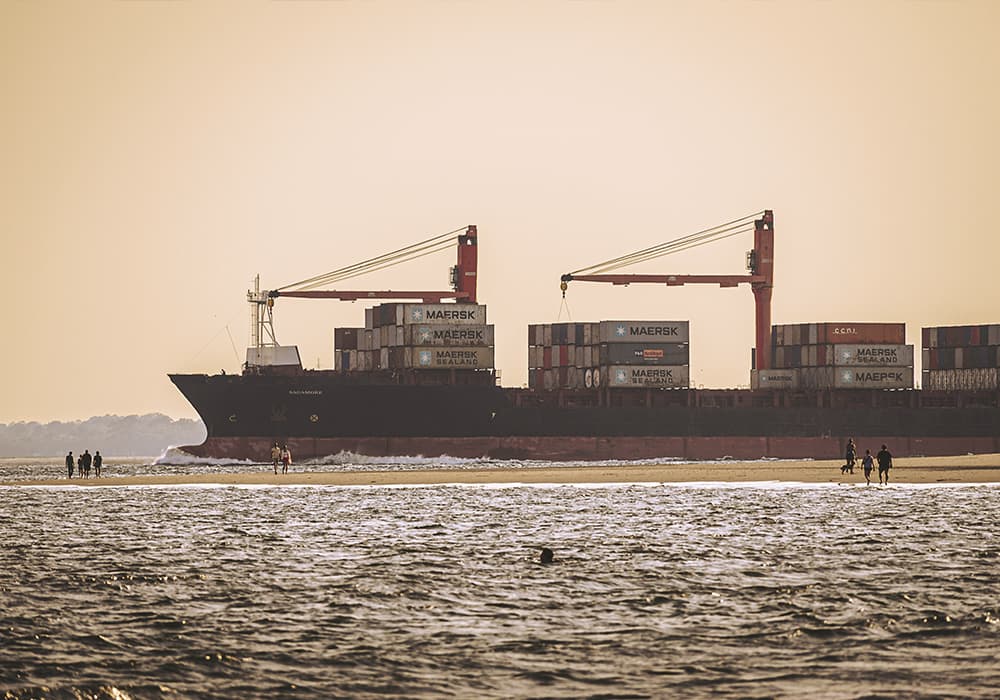
The first and most visible causality of the conflict was energy. With key shipping lanes potentially blocked and producers in the region compelled to cut output for security reasons, a supply shock was inevitable. Oil prices have not merely risen; they have gone through the roof, creating immediate inflationary pressure on global logistics.
This matters because fertilizer is, in essence, a product of energy. The synthesis of nitrogen based fertilizers like urea relies heavily on natural gas as both a fuel and a feedstock. In the Middle East, this industry is integrated. When oil facilities are compromised, natural gas production often suffers similarly. When energy prices spike, the manufacturing cost of fertilizer surges in tandem.
But the challenge is deeper than just the price of gas.
Blocking The Supply of Critical Fertilizer Ingredients
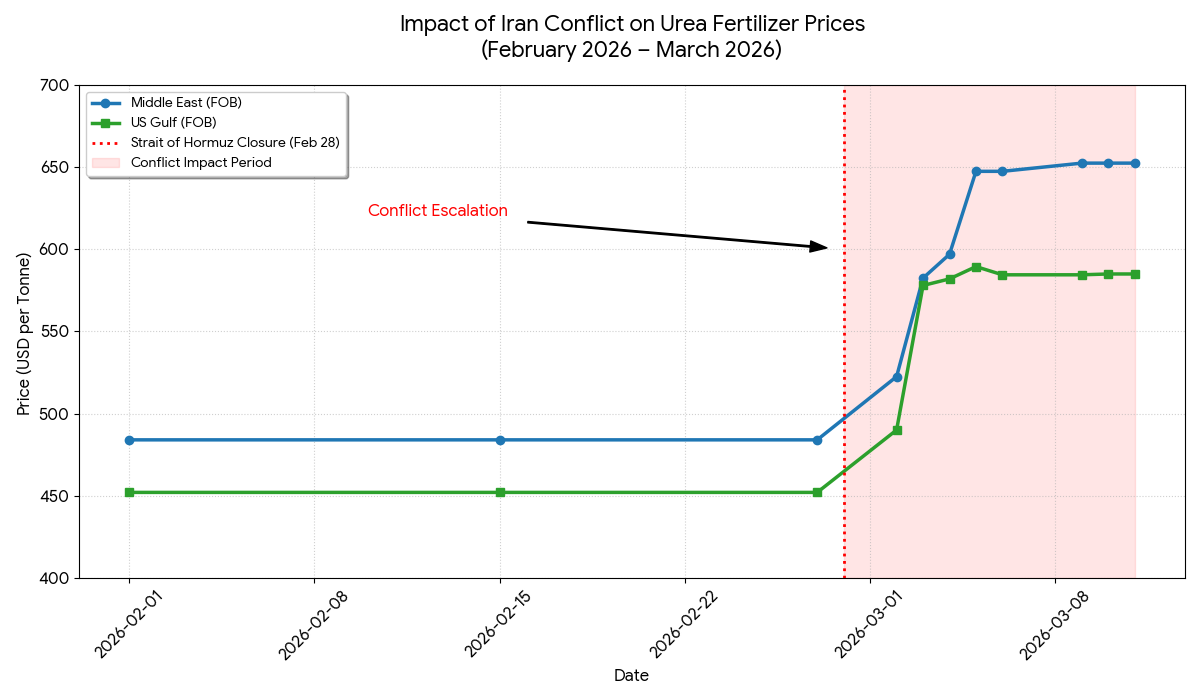
The business impact is compounded by severe supply chain disruptions. The Middle East is a global production hub for two critical ingredients: urea (the most common nitrogen fertilizer) and sulphur (a key byproduct of oil and gas processing).
Sulphur might not get as many headlines as urea, but it is indispensable for the production of phosphate fertilizers. It is used to convert rock phosphate into a form that plants can actually absorb.
When conflict blocks exports from this region, we are not just facing an increase in freight costs; we are facing a fundamental scarcity of raw materials. Producers elsewhere in the world are forced to bid for a limited pool of these commodities, sending prices skyrocketing worldwide.
The Squeeze on Farmers and Beyond
For our clients in the agricultural sector, this is a crisis of margins. Farmers are price takers, not price makers. When the cost of their most vital input increases dramatically, they cannot simply raise the price of their rice, corn, or palm oil overnight.
Reduced Profitability
There is an immediate erosion of farm income, making it difficult to cover operational costs and invest in the next season.
Reduced Yields
If farmers are forced to cut back on application rates due to cost or lack of availability, crop yields will inevitably decline.
This is where the ripple becomes a wave. Lower yields lead to food scarcity, which drives up food prices, affecting consumers and manufacturers throughout the food processing industry. The stability of the entire chain is predicated on affordable and available nutrients.
How We Prepared
At Borochemie, we take our role as one of Malaysia’s largest suppliers of fertilizer products seriously. Since starting our operations in 2002, we have recognized that our clients depend on us for continuity, not just products.
When the warning signs of this conflict began to emerge, we did not wait for the disruption to hit our shores. Our priority was to protect our clients as much as possible from the impending volatility. We enacted a proactive and multi pronged resilience strategy:
Fast Tracked Imports
We expedited existing orders, pushing for the earliest possible shipment dates to ensure that materials were on the water and out of the high risk zones before escalation.
Secured Advanced Supply
We leveraged our international network of partners to secure supply contracts in advance.
Increased Inventory
We substantially boosted our inventory levels within Malaysia. By holding more stock locally, we have created a critical buffer that reduces our dependency on immediate imports during a period of broken supply chains.
Conclusion
The conflict involving Iran is a somber reminder of how interconnected our global economy is. For businesses that rely on fertilizer, a geopolitical event thousands of miles away can become a line item threat on a balance sheet within weeks.
Professional and forward thinking management requires recognizing these systemic risks. While we cannot control the geopolitics of the Middle East, we can control our response. By choosing partners who prioritize inventory security, diversified sourcing, and proactive supply chain planning, businesses in the agricultural sector can weather these storms.
The world still needs to eat, and plants still need nutrients. Our job at Borochemie is to make sure that, regardless of the global climate, those nutrients remain available.
